

Do you know what it’s about? When Everyone Uses the Same Words
At what point does repetition stop informing us and start shaping what we believe?
Have you ever watched the news, changed the channel, and heard almost exactly the same thing?
Not simply the same story.

The same phrase.
The same adjectives.
Sometimes, seemingly, the same sentence.
I've noticed it enough times over the years that it bothers me.
Of course, there are perfectly ordinary explanations for some of it. News organizations use wire services. Reporters work from the same press releases. Officials give statements that get quoted repeatedly. Media companies own multiple stations and distribute material across them.
But every once in a while, the repetition becomes so noticeable that I find myself asking a different question:
When many supposedly independent voices begin sounding like one voice, what effect does that have on the people listening?
And that question has a rather uncomfortable history.
A Little History Called “Mockingbird”
If you spend much time wandering through the stranger corridors of American history, sooner or later you'll encounter something called Operation Mockingbird.
The internet version is usually dramatic: the CIA infiltrated the American media, controlled the news and manipulated what Americans believed.
The documented history is more complicated.
But it is also real enough to be disturbing.
During the Cold War, the CIA developed relationships with journalists and media organizations as part of its intelligence and propaganda activities. Some journalists supplied information. Some relationships were paid. Journalistic credentials could provide valuable access abroad, while foreign media could be used to influence opinion.
By the 1970s, revelations about intelligence activities prompted Congress to investigate.
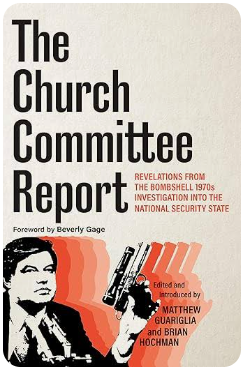
In 1975, the United States Senate created what became known as the Church Committee, chaired by Senator Frank Church of Idaho. Its investigation exposed numerous intelligence abuses and led to a much broader public debate about the boundaries of secret government activity.
Among the subjects examined was the CIA's relationship with the press.
The committee reported that, when the CIA announced new media guidelines in February 1976, approximately 50 American journalists or employees of U.S. media organizations were employed by the CIA or maintained some other covert relationship with it.

That isn't an internet meme.
That is history.
In February 1976, CIA Director George H. W. Bush issued a policy stating that the agency would no longer enter into paid or contractual relationships with accredited correspondents working for American news organizations. The same policy, however, said the CIA would continue to accept information voluntarily offered by journalists.
The Church Committee wanted stronger safeguards. Among its recommendations were prohibitions on paid or contractual CIA relationships with accredited journalists and restrictions on unattributed CIA-produced material intended for distribution within the United States.
Whatever one thinks about the motives behind those Cold War practices, there is an important lesson buried in the history:
People understood that controlling—or even influencing—the flow of information could influence public perception.
And that brings me back to today.
When Different Faces Read the Same Words
One of the strangest modern examples happened in 2018.
Local television anchors at numerous stations owned by Sinclair Broadcast Group delivered remarkably similar statements warning viewers about biased and false news.
Then someone assembled clips of the broadcasts together.
Different cities.
Different stations.
Different anchors.
Same script.
Watching all those individual broadcasters speaking in near-unison created an entirely different impression from watching any one station by itself. The wording hadn't independently occurred to dozens of anchors; it had been mandated by their corporate owner.
That doesn't make it Operation Mockingbird.
It doesn't prove CIA involvement.
It doesn't even prove that the underlying message was false.
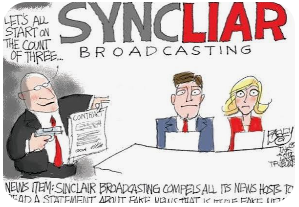
But it does demonstrate something worth remembering: hearing the same words from different sources doesn't necessarily mean multiple independent sources reached the same conclusion.
Sometimes they originated from the same place.
And that matters because of something our brains do remarkably well.
And remarkably badly.
If You Hear It Enough, It Starts to Feel True
Psychologists have a name for this: The illusory truth effect.
In simple terms, when we're exposed repeatedly to a statement, it can begin to feel more truthful merely because it has become familiar.
More troublingly, research has found that repetition can increase perceived truth even when the repeated information is false—and sometimes even when people possess knowledge that contradicts it.
A 2023 study took this a step further.
Researchers found that after people had encountered misinformation once before, they were more likely to share it later. Repetition increased perceived accuracy, and that increased perception of accuracy helped drive people's willingness to pass the information along.
Think about that for a moment.
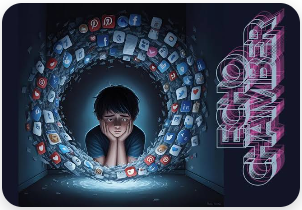
You hear something on television.
Then you see it online.
Another outlet repeats it.
Someone shares it on Facebook.
A commentator mentions it.
Your neighbor repeats it.
Eventually, you may no longer remember where you first heard it.
You simply remember that you've heard it everywhere.
And everywhere begins to feel suspiciously like everyone agrees.
But those are not necessarily the same thing.
Is That Brainwashing?
That's the word that initially came to my mind.
Brainwashing.
But perhaps that's too simple.
Brainwashing implies somebody deliberately sitting behind a curtain controlling every message.
Sometimes coordinated messaging certainly exists. Sometimes corporations distribute scripts. Governments and political campaigns have press strategies. Companies issue talking points. Advocacy organizations promote preferred language. Wire services distribute reporting that thousands of outlets legitimately use.
And sometimes journalists simply look at the same facts and reach similar conclusions.
So identical language alone doesn't prove a conspiracy.
But perhaps intent isn't the only thing worth examining.
What does repetition do to us whether it is intentional or not?
That's the part I find more interesting.
Because if hearing something repeatedly makes it feel more credible, then the effect occurs regardless of whether anyone deliberately planned to manipulate us.
And today's information environment provides repetition on a scale previous generations couldn't have imagined.
· Television.
· Websites.
· YouTube.
· Facebook.
· X.
· TikTok.
· Podcasts.
· Push notifications.
· Search results.
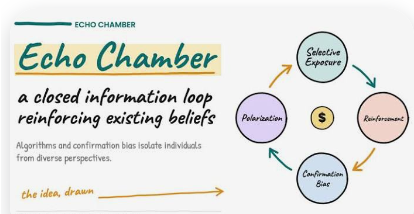
And increasingly, algorithms deciding which version of reality gets placed in front of us next.
The same idea doesn't have to be whispered into one person's ear a hundred times.
It can come from a hundred different screens.
Perhaps We Should Stop Counting Voices
This is where I've landed.
When I hear the same phrase repeated across multiple outlets, I don't automatically assume they're lying.
I also don't automatically assume they're independent.
I want to know:
Where did the information originate?
· Was it original reporting?
· A wire-service story?
· A government statement?
· A corporate press release?
· A political campaign?
· A study?
· An anonymous source?
Or are twenty websites essentially repeating one original report?
Those are very different things.
Ten outlets repeating information from the same source aren't necessarily ten sources.
Sometimes they're one source with ten microphones.
And perhaps that's one of the most important distinctions we can make in an age drowning in information.
Don't Let Me Tell You What to Think Either
There's an irony in writing an article warning people about influence.
I'm giving you information too.
So don't simply believe me.
· Look up the Church Committee.
· Read the documents.
· Research the illusory truth effect.
· Find the Sinclair video and watch those local broadcasts together.
· Then look for criticism of those interpretations too.
And the next time a phrase suddenly seems to be everywhere, don't automatically conclude there's a conspiracy behind it.
But don't automatically dismiss your discomfort either.
Stop.
· Look for the original source.
· Compare genuinely independent reporting.
· Separate fact from commentary.
· And ask one very simple question:
Do I believe this because I've examined the evidence—or because I've heard it so many times that it has begun to feel familiar?
History has already taught us that governments understand the power of information.
Psychology has taught us that repetition influences our perception of truth.
Technology has given repetition a reach unlike anything we've experienced before.
What we do with that knowledge is up to us.
Because information should give us something to think about.
It should never relieve us of the responsibility to think.
PULSE
News, culture, and the things underneath the headline.
For more insight on property, process, Florida—and the occasional turn down a stranger road—follow along.
#Pulse #MediaLiteracy #OperationMockingbird #ChurchCommittee #IllusoryTruthEffect #NewsMedia #CriticalThinking #MediaHistory #Information #Psychology #ThinkForYourself #HistoryMatters #QuestionTheSource