

The Woman Who Saved George Washington's Home
A Letter That Changed American History
The Birth of America's Historic Preservation Movement
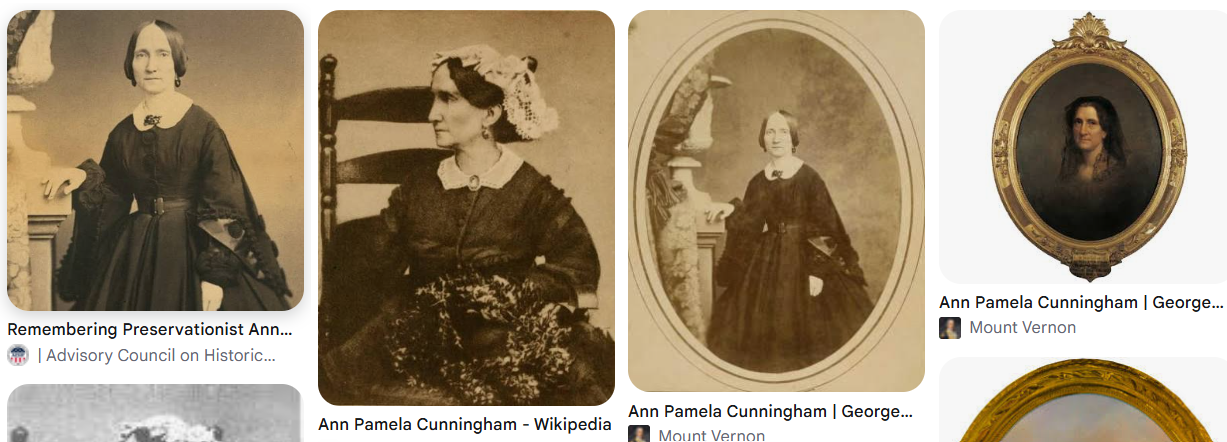
In 1853, Louisa Bird Cunningham was traveling along Virginia's Potomac River when she caught sight of Mount Vernon, the former home of George Washington.
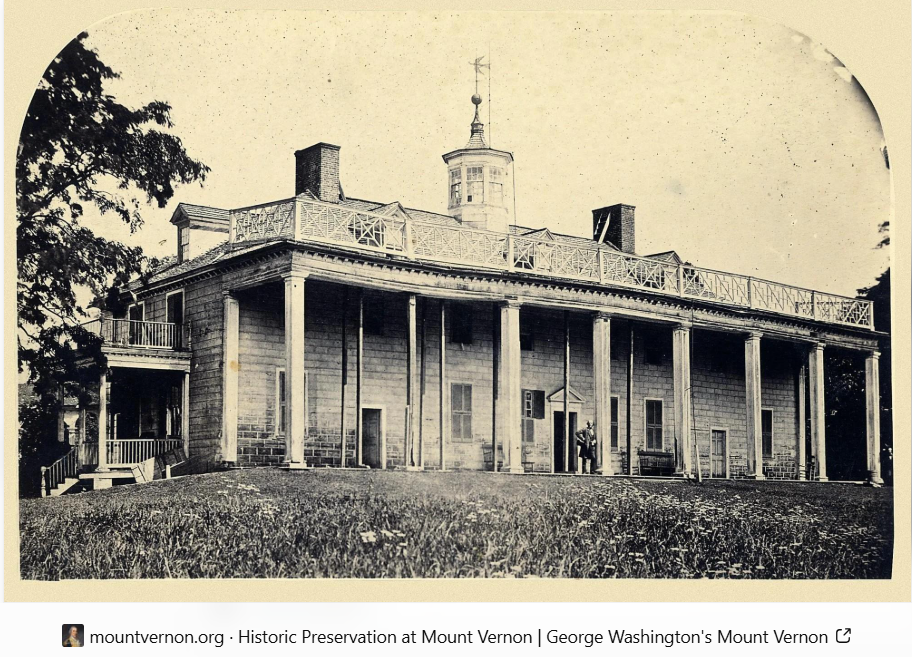
What should have been a magnificent reminder of America's beginnings was a troubling sight.
The mansion and surrounding estate had fallen into disrepair. Years of financial difficulties, inadequate maintenance, and the demands of managing a large plantation had taken their toll.
Distressed by what she saw, Louisa wrote to her daughter, Ann Pamela Cunningham, questioning why the women of America couldn't preserve Washington's home if the men would not.
That simple question would change the course of American historic preservation.
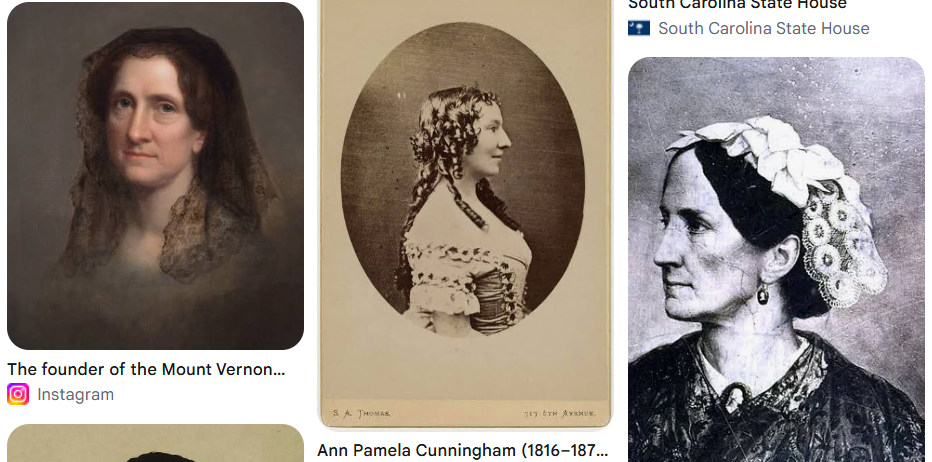
A Woman Determined to Make a Difference
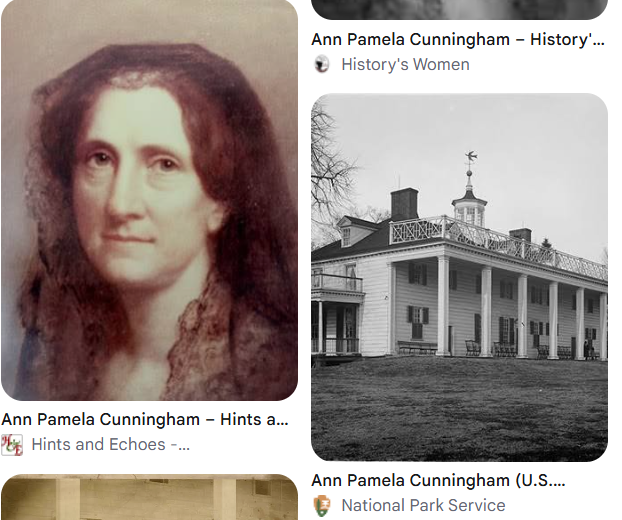
Born in South Carolina in 1816, Ann Pamela Cunningham had experienced significant physical difficulties since a horseback riding accident during her youth.
Chronic pain and limited mobility affected much of her adult life.
Yet her physical limitations did not diminish her determination.
After receiving her mother's letter, Cunningham began appealing to women throughout the country to help rescue Mount Vernon.
Writing under the name A Southern Matron, she published an appeal in the Charleston Mercury in December 1853.
Her argument was straightforward: the home of America's first president was too important to be lost through neglect or commercial development.
But saving it would require more than enthusiasm.
It would require an extraordinary fundraising effort.
The $200,000 Challenge
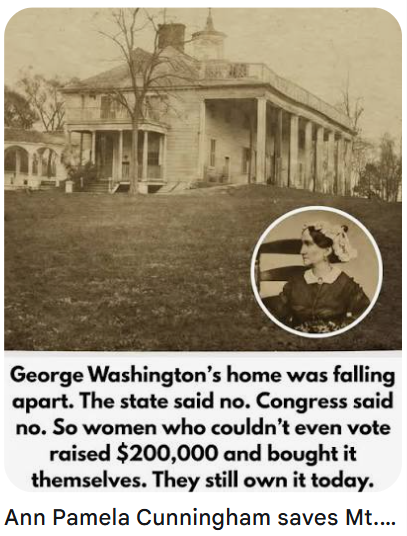
Mount Vernon was then owned by John Augustine Washington III, a great-grandnephew of George Washington.
The property had become increasingly expensive to maintain. Attempts to interest Virginia and the federal government in purchasing it had been unsuccessful.
Cunningham and her supporters decided that private citizens would have to accomplish what government had declined to undertake.
She established the Mount Vernon Ladies' Association, organizing women across the country to raise the necessary funds.
The asking price was $200,000—an enormous amount in the 1850s.
Through donations, organized fundraising, public appeals, and persistent negotiations, the association achieved something few believed possible.
In April 1858, an agreement was signed to purchase the mansion and approximately 200 acres.
The association completed payment in 1860 and took possession of the estate.
George Washington's home had been saved.
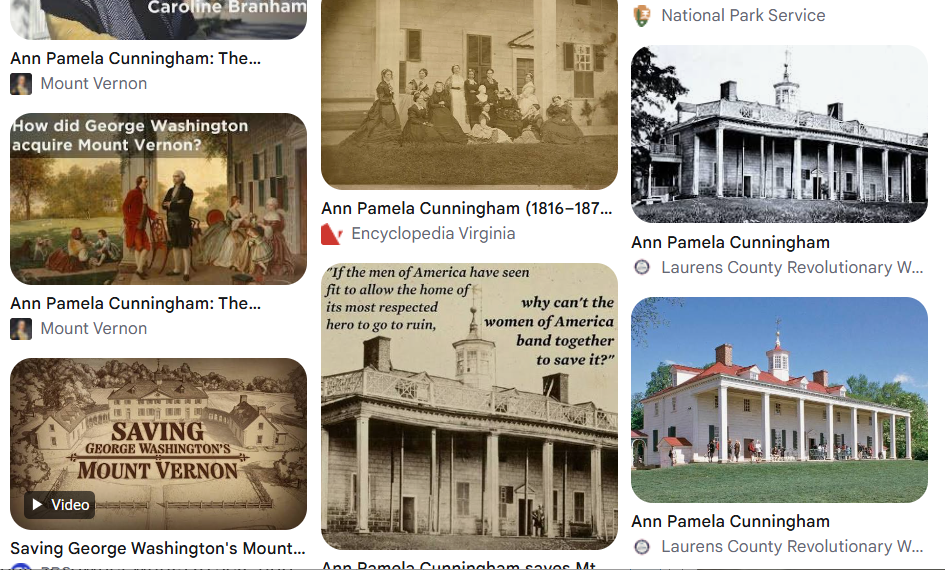
Preserving History During a Divided Nation
The timing could hardly have been more difficult.
The United States was approaching the Civil War, and sectional tensions threatened nearly every national undertaking.
Nevertheless, the women of the association worked across state boundaries toward a common purpose.
When the Civil War began in 1861, Mount Vernon's preservation faced further uncertainty.
The estate itself was a reminder of the nation's complicated past. Washington had enslaved hundreds of people during his lifetime, and the plantation's history cannot be fully understood without acknowledging their labor and experiences.
Preserving Mount Vernon ultimately meant preserving a place where both the nation's founding ideals and its profound contradictions could be studied.
Cunningham continued her efforts through difficult years and remained the association's first Regent until 1874.
She died the following year.
The Beginning of a Movement
What began as an effort to rescue one deteriorating property became a model for historic preservation throughout the United States.
The Mount Vernon Ladies' Association is recognized as America's first national historic preservation organization.
Remarkably, the association continues to own and maintain Mount Vernon today.
Its success demonstrated that historic properties could be protected through organized private initiative, fundraising, stewardship, and public support.
The movement that followed would eventually help preserve historic homes, neighborhoods, architectural landmarks, gardens, and sites of national significance.
Cunningham helped establish a principle that remains central to historic preservation:
A building's importance cannot always be determined by its commercial value or the potential profit from replacing it.
What Her Story Means to Real Estate Today
Real estate professionals regularly encounter properties whose value extends beyond square footage, acreage, location, and comparable sales.
An aging building may appear economically obsolete.
A historic structure may require considerable repairs.
An old neighborhood may attract redevelopment interest because its land is worth more than its existing improvements.
Sometimes redevelopment is necessary. Sometimes preservation is financially feasible. And sometimes the appropriate solution is a careful combination of both.
But Cunningham's story reminds us to ask questions before assuming demolition or replacement is the only reasonable answer.
What is the history of the property?
Who built it?
Who lived or worked there?
What architectural or cultural significance does it hold?
And what would be lost if it disappeared?
Historic preservation isn't simply about keeping old buildings standing. It's about recognizing the stories, craftsmanship, communities, and events connected to those places.
For property owners, preservation can also involve practical considerations, including maintenance costs, rehabilitation feasibility, building codes, local historic designations, and potential tax incentives.
The challenge is balancing stewardship with responsible ownership.
A Legacy Beyond the Property Line
Ann Pamela Cunningham never became famous for designing an extraordinary building or developing an ambitious community.
Her achievement was recognizing that an existing property deserved to survive.
She saw beyond deteriorating walls and neglected grounds to the historical significance of what stood before her.
And she persuaded an entire nation to help preserve it.
Today, visitors can still walk through Mount Vernon, explore its grounds, and learn about the people whose lives shaped its history.
That opportunity exists in large part because one woman refused to accept that its disappearance was inevitable.
Ann Pamela Cunningham understood something that remains true in real estate today: a property may belong to an individual, but its history can belong to generations.
And sometimes, the most important thing we can build for the future is a commitment to preserve the past.
#RealEstateHistory #AnnPamelaCunningham #MountVernon #HistoricPreservation #WomenInHistory #AmericanArchitecture #PropertyHistory #EveryPlaceHasAStory #KartalHomes #WaypointProperties